
This is a complete guide to stretching to keep your body healthy, pain-free and mobile.
If you want to improve flexibility, fix posture, and ease pain with just a few minutes a day, you’ll love the routines in this article.
Small effort, big health benefits.
Let’s get started.
Purposeful Stretching Routines
If you are stretching for a specific reason, here are the 3 most common purposeful stretching routines:
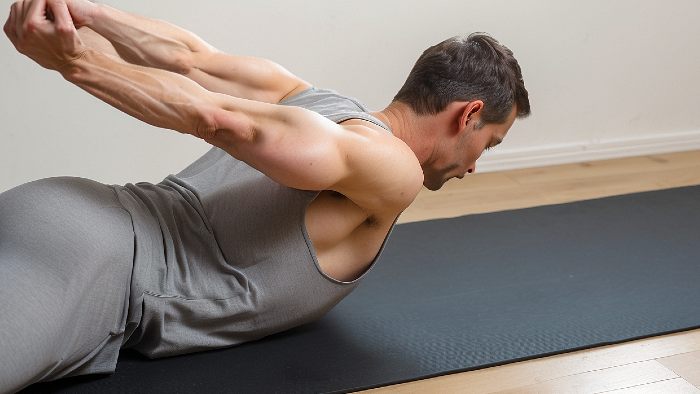
- Daily stretching routine to fix posture.
Posture Fix Routine →
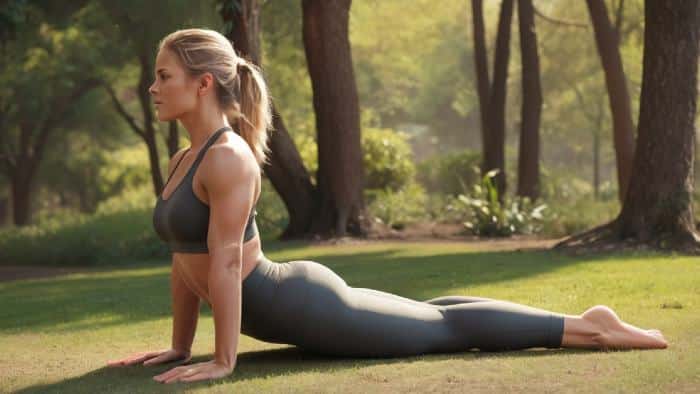
- Daily stretching routine to reduce lower back pain.
Fix Back Pain Routine →

- Daily stretching routine to relieve tight hips.
See Hips Routine →
Stretching Products You Need
These 3 stretching products will make your stretching routine better.

- Cushioned surface for comfort and support on hard floors.
- Non-slip texture to prevent slipping and getting injured.
- Avoid floor germs.

- Ease into deeper stretches safely.
- Helps you hold harder stretch positions.
- Give you better control and precision for hard to reach areas.
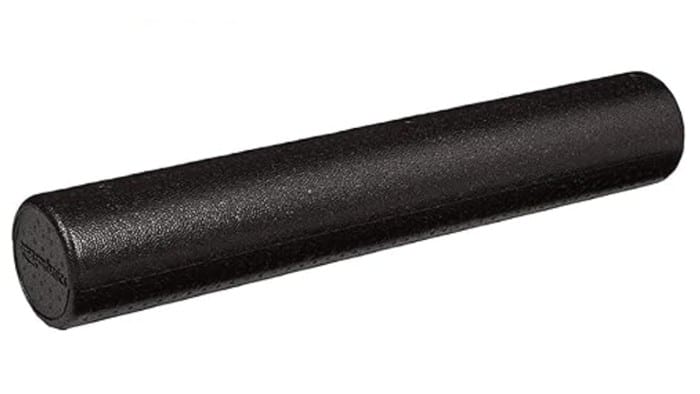
- Relieve muscle tension before stretching.
- Increases circulation to muscles so you can do deeper stretches.
- Improves your range of motion.
8 Essential Stretches To Do Daily
If you are stretching for general overall health, flexibility and mobility, here is your 5 minute daily stretch routine.
Do this daily and within 7 days you will notice yourself feeling better and less stiff.
What’s stopping you? It only takes 5 minutes per day.
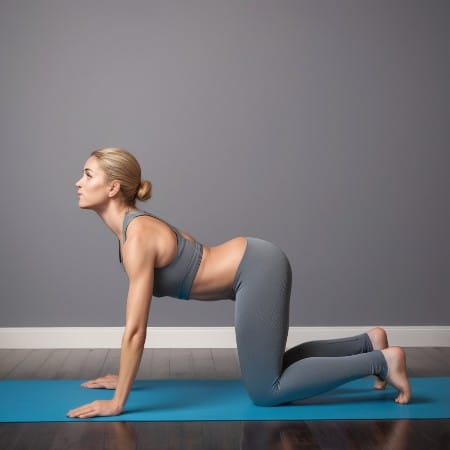
1. Cat-Cow Stretch (Spinal Mobility)
Why:
- Improves your spinal flexibility and reduces back stiffness.
How:
- Start on all fours with wrists under shoulders and knees under hips.
- Inhale: Arch your back, lift your head, and look upward (Cow).
- Exhale: Round your back, tuck your chin, and draw your belly toward your spine (Cat).
Duration:
- 5-6 rounds.
2. Seated Forward Fold (Hamstrings & Lower Back)
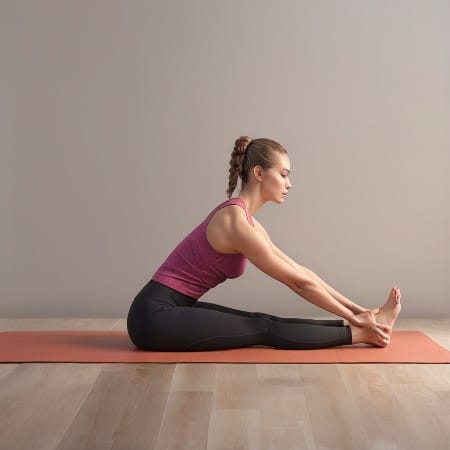
Why:
- Stretches hamstrings, lower back, and calves.
How:
- Sit with legs straight and feet flexed.
- Reach forward with your hands, keeping your spine straight.
- Hold where comfortable (don’t force it).
Duration:
- 20-30 seconds.
3. Child’s Pose (Lower Back & Hips)
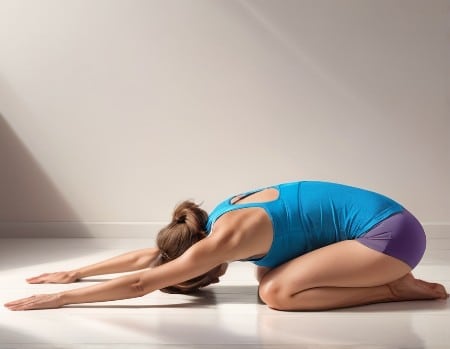
Why:
- Relieves tension in the back, hips, and thighs.
How:
- Kneel on the floor, sit back onto your heels, and stretch your arms forward.
- Rest your forehead on the floor.
Duration:
- 30 seconds.
4. Neck Stretch (Neck & Shoulders)
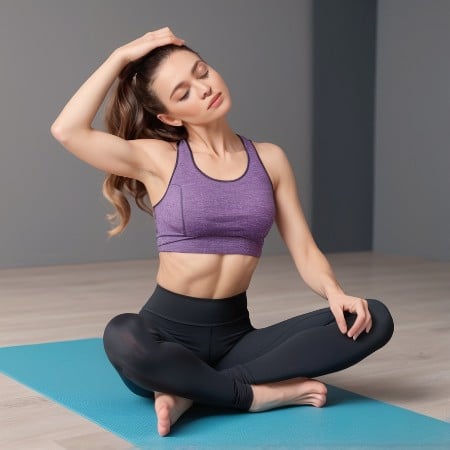
Why:
- Reduces tension in the neck and shoulders, especially for those who sit often.
How:
- Sit or stand tall.
- Gently tilt your head to one side, bringing your ear toward your shoulder.
- Use your hand for a gentle pull if needed. Repeat on the other side.
Duration:
- 10-15 seconds per side.
5. Standing Side Stretch (Obliques & Spine)
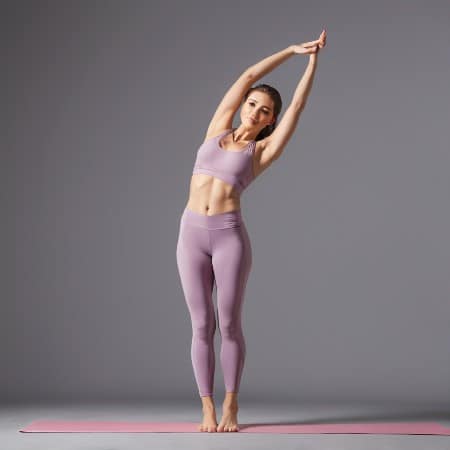
Why:
- Stretches the sides of your body and improves posture.
How:
- Stand tall, reach one arm overhead, and lean to the opposite side.
- Keep your core engaged and avoid collapsing forward.
Duration:
- 15 seconds per side.
6. Hip Flexor Stretch (Hips & Lower Back)
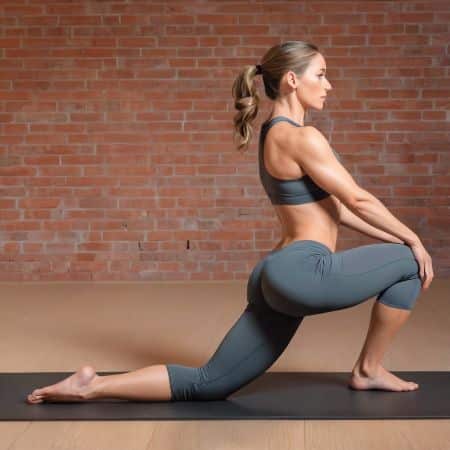
Why:
- Counteracts tight hip flexors from prolonged sitting.
How:
- Kneel on one knee with the other foot forward in a lunge position.
- Shift your weight forward while keeping your torso upright.
Duration:
- 20-30 seconds per side.
7. Butterfly Stretch (Inner Thighs & Groin)
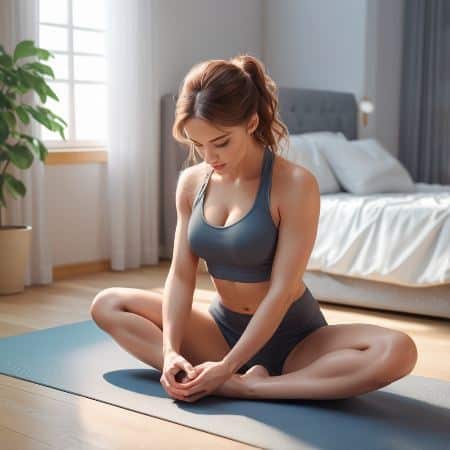
Why:
- Opens up the hips and stretches the inner thighs.
How:
- Sit with the soles of your feet together and knees out to the sides.
- Hold your feet with your hands and gently press your knees toward the floor.
Duration:
- 20-30 seconds.
8. Chest Opener (Chest & Shoulders)
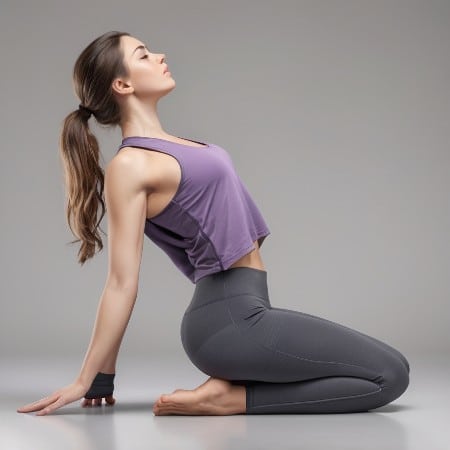
Why:
- Releases tension from slouching and opens up the chest.
How:
- Stand or kneel with hands clasped behind your back.
- Straighten your arms, lift your chest, and draw your shoulders back.
Duration:
- 20-30 seconds.
Tips for Stretching:
- Breathe Deeply: Deep breaths enhance relaxation and help muscles release tension.
- Stay Comfortable: Stretch to the point of mild tension, not pain.
- Consistency: Daily practice yields the best results.
5 Stretching Myths
Stretching Prevents Injuries
Myth:
- Stretching before exercise guarantees injury prevention.
Truth:
- While stretching can improve flexibility and prepare muscles, research shows it doesn’t directly prevent injuries. A proper warm-up with dynamic movements is more effective.
You Should Always Stretch Before a Workout
Myth:
- Stretching is mandatory before any physical activity.
Truth:
- Static stretching before workouts can reduce strength and performance. Instead, dynamic stretching is better to activate muscles for exercise.
Stretching Is Only for Flexible People
Myth:
- Stretching is unnecessary if you’re already flexible.
Truth:
- Stretching benefits everyone by maintaining mobility, improving posture, and reducing muscle tension, even if you’re naturally flexible.
The Longer You Hold a Stretch, the Better
Myth:
- Holding stretches for a long time is more effective.
Truth:
- Over-holding a stretch can strain muscles. Most benefits come from holding stretches for 15–30 seconds, especially when combined with proper technique.
Stretching Reduces Muscle Soreness
Myth:
- Stretching after a workout eliminates soreness.
Truth:
- Stretching may help relieve tension but doesn’t significantly reduce delayed onset muscle soreness (DOMS). Foam rolling or active recovery is more effective for soreness.