
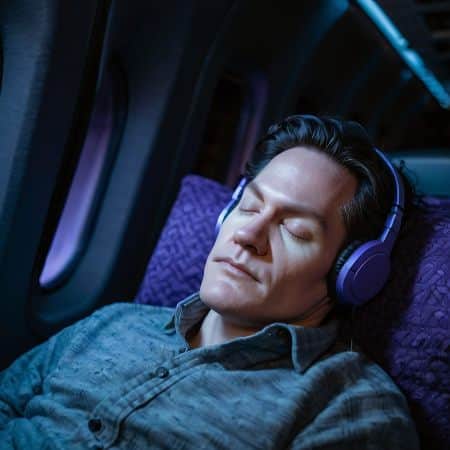
 Jet lag sucks.
You arrive in a new city, excited and ready to explore.
But your body thinks it’s 1 AM.
You can barely string a sentence together or read a map because you’re groggy and disoriented.
It sucks—But it could be worse:
- You could have food poisoning.
- The airline could have lost your luggage.
- Long delays could have you stuck at home.
Yes, jet lag sucks…
…But the good news: It can be conquered.
7 Tried-and-Tested Strategies To Lessen Jet Lag (So You Arrive Fresh in Any Time Zone)
1. Fast Before and During the Flight

- Fasting can help reset the body’s internal clock.
- Skipping food, caffeine, and alcohol before and during the flight allows your system to align more easily with the destination’s time zone.
- Overeating during flights can disrupt sleep and digestion, so it’s best to avoid calories.
2. Prioritize Sleep Immediately After Takeoff
- Skip meal service and go straight to sleep after the flight takes off, especially if it aligns with nighttime at your destination.
- Informing the flight crew beforehand can minimize disturbances and help get your sleep schedule on track quickly.
3. Use Blue Light Blocking Glasses
- Cabin lights and screen exposure can trick your brain into staying in “daytime mode,” disrupting melatonin production.
- Blue light-blocking glasses help filter harmful light, making it easier to wind down for sleep.
- Read a book instead of using electronic devices to prepare the body for rest.
4. Avoid Alcohol Completely
- Even small amounts of alcohol can disrupt sleep and lead to dehydration, both of which worsen jet lag.
- Avoid alcohol entirely while traveling to ensure better rest and recovery.
5. Stay Hydrated

- Airplane cabins are extremely dry, and dehydration can worsen fatigue.
- Drinking plenty of water before and during the flight helps combat this dryness and reduces feelings of tiredness.
6. Control Your Sensory Environment
- Bring earplugs and an over-ear eye mask to block out light and noise, creating a peaceful environment for sleep.
- These tools are essential for improving in-flight sleep quality.
7. Exercise Upon Arrival

- After landing, immediately have a quick workout or some light stretching to help align your body’s clock with the local time.
- Physical activity boosts serotonin levels, signaling wakefulness and helping adjust your circadian rhythm.
What Causes Jet Lag?
Jet lag happens when your body’s internal clock, called the circadian rhythm, gets out of sync with the time at your destination.
Imagine your body thinks it’s 3 AM, but everyone else is eating lunch.
This confusion can cause:
- Tiredness: Feeling sleepy at odd times.
- Difficulty Sleeping: Struggling to fall asleep or stay asleep.
- Stomach Issues: Feeling hungry or full at unusual times.
- Irritability: Being moody or short-tempered.
- Brain Fog: Trouble concentrating or remembering things.
Factors That Affect Jet Lag
Jet lag is your internal body clock malfunctioning.
When on a long haul flight these factors mess up your body clock:
- No Light Exposure. Sunlight signals your brain when it’s time to wake up or sleep. On a plane your body has no sense of what the actual time is.
- Wrong Meal Times. Eating at the wrong times can confuse your body’s schedule. It is better to just fast the entire flight and calibrate on arrival.
- Travel Direction. Traveling east is harder because it shortens your day, while traveling west lengthens it, making it easier to adjust.
- Number of Time Zones Crossed. The more zones you cross, the harder it is to adjust.
- Individual Differences. Some people naturally adjust faster than others.
Supplements That Might Lessen Jet Lag
 Certain supplements are proven to support your body’s adjustment to a new time zone.
Here are some options to consider:
Melatonin
- What It Does: Melatonin is a hormone your body naturally produces to regulate sleep. Taking it at the right time can help signal your body to sleep in alignment with your new time zone.
- How to Use: Take 0.5–5 mg about 30–60 minutes before your target bedtime in the new time zone. Avoid taking it during the day, as it may make you groggy.
- Evidence: Studies show melatonin is one of the most effective supplements for reducing jet lag symptoms.
Magnesium
- What It Does: Magnesium supports relaxation and can improve sleep quality by calming your nervous system.
- How to Use: Take 200–400 mg in the evening to promote restful sleep. Look for forms like magnesium glycinate for better absorption.
- Evidence: Research suggests magnesium helps with sleep disturbances caused by travel.
Vitamin B12
- What It Does: B12 helps regulate your circadian rhythm and energy levels, making it useful for adjusting to a new time zone.
- How to Use: Take it in the morning to help boost wakefulness and align your body clock with the local day.
- Evidence: Studies show B12 may improve sleep-wake cycles, especially when combined with light exposure.
Adaptogens (Ashwagandha or Rhodiola)
- What They Do: These natural herbs help the body adapt to stress, including the physical stress of travel and time zone changes.
- How to Use: Take ashwagandha or rhodiola in the morning to support energy and reduce fatigue.
- Evidence: Adaptogens may improve focus and reduce feelings of jet lag.
Probiotics
- What They Do: Traveling can disrupt your gut health, which may worsen fatigue and digestive issues. Probiotics can help restore balance and support overall well-being.
- How to Use: Take a high-quality probiotic daily, starting a few days before your trip and continuing after arrival.
- Evidence: Research links gut health to circadian rhythm regulation.
Things to Keep in Mind
- Timing Is Key: Some supplements, like melatonin, should be taken at specific times to avoid disrupting your body further.
- Check for Interactions: If you take other medications, talk to a healthcare provider to ensure supplements won’t interfere.
- Supplements Are Helpers, Not Magic: They can support your adjustment, but they’re not a substitute for proper sleep, hydration, and light exposure.
References
- Harvard Medical School: Flying East? Try Fasting to Beat Jet Lag
- Mayo Clinic: Dehydration Overview
- Harvard Health: Blue Light Has a Dark Side
- National Institute of Health: Noise and Light Effects on Sleep
- Harvard Medical School: Flying East? Try Fasting to Beat Jet La