
- Jump to a proven sauna routine.
- Try it for at least 1-month.
- Reap the rewards.
↓

Conor McGregor
- Uses sauna as a weight-cutting tool to speed up preparation just before a fight.
Conor’s Sauna Routine →

Hugh Jackman
- Practices contrast therapy while doing hardcore training for movie roles.
See His Sauna Routine →

Lady Gaga
- Hardcore infrared sauna user to give her pain relief from fibromyalgia.
Gaga’s Sauna Routine →
Most Popular Home Sauna Solutions
🌡️

Infrared Blanket
- Sauna blanket delivers far infrared heat to mimic the sun.
- 8 adjustable temperature settings.
- Portable, foldable, 18 pounds (8 kg).

The Sauna Mini
- Premium cedar home sauna with glass door.
- Seating room for 2.
- Powered by an electric 6kW heater to enjoy temps up to 200°F (93°C).
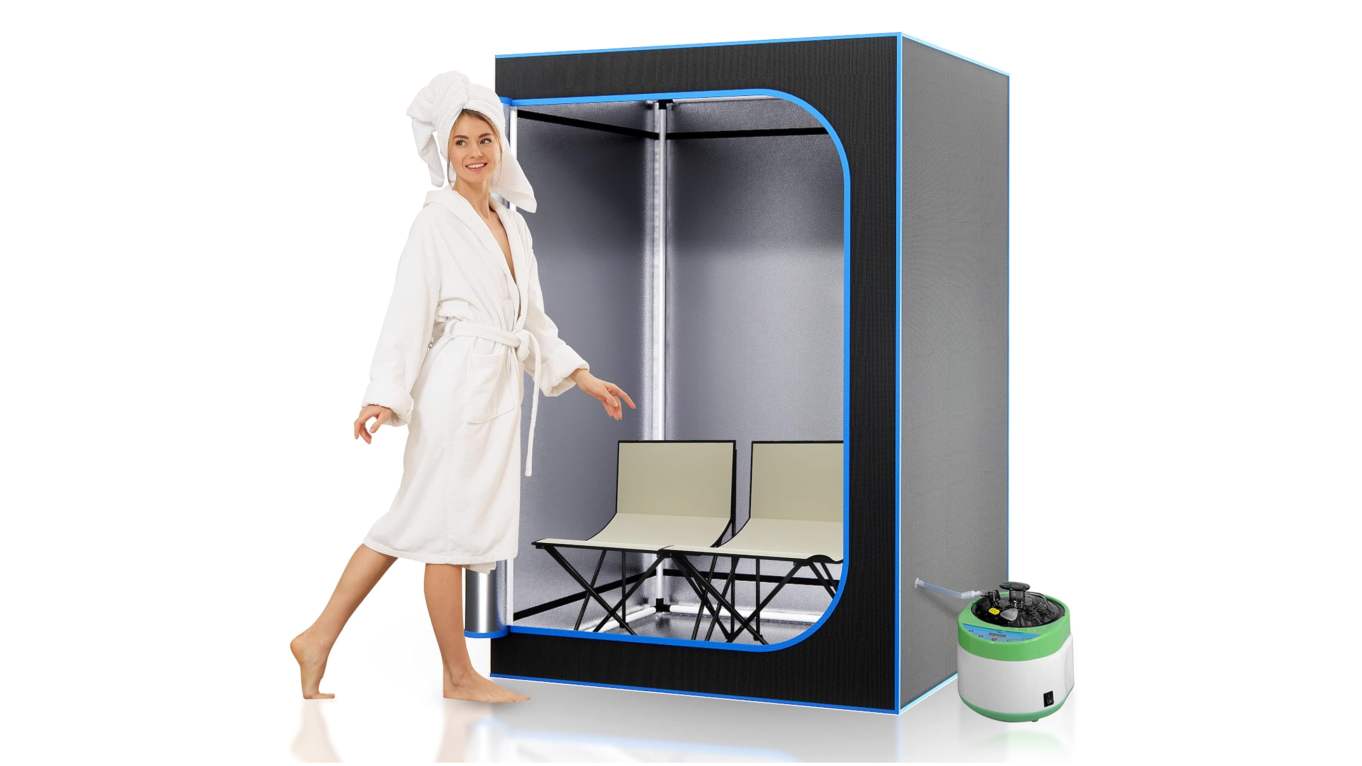
SereneLife Sauna
- Portable steam sauna with room for 2.
- Powered by a 1,600 Watt steam pot to enjoy temps up to 122°F (50°C).
- Affordable for beginners.
Learn The Superhuman Benefits Of Sauna

“The sauna is the poor man’s pharmacy.” – Finnish proverb
Immediate Benefits of Sauna
- Feel happier and less stressed. You feel great after a sauna session. The endorphins released give you an instant hit of euphoria and a boost of optimism which lasts for hours. You should seriously try it for yourself.
- Feel happier.
- Feel less stressed.
- Feel more optimistic.
- Soothe your muscles. Your muscles feel great after a sauna—even if you just had a massive workout. The heat of the sauna relaxes tight muscles and reduces joint stiffness. It will also redux inflammation and speed up muscle recovery. Combine sauna with cold plunge to even greater boost your recovery.
- Muscle relaxation.
- Muscle pain relief.
- Speed up muscle recovery.
- Boost your mental clarity and sleep quality. You will feel refreshed and your thought clearer after a sauna session—even if you felt like crap beforehand.
- Increased focus.
- Increased mental relaxation.
- improved sleep quality.
Benefits After Regular Sauna Use (2 – 3 Weeks)

“In the sauna, one must conduct oneself as one would in church.” – Finnish proverb
- Detoxify your body. Your body expels many heavy metals and environmental toxins through sweat. What do you do in the sauna? You sweat. With regular sauna sessions you detoxify your body on a regular basis.
- Sweat out heavy metals.
- Sweat out environmental toxins.
- Lose weight
- Improve your cardiovascular health. Regular sauna use improves your cardiovascular conditions and lowers your blood pressure over time.
- More efficient blood circulation.
- More blood flow to muscles and skin for recovery.
- Lowers blood pressure.
- Boost your growth hormone levels & zest for life. Sauna increases growth hormone levels, which is a strong all-around hormone for fat burning, muscle maintenance and overall zest for life.
- Burn fat easier.
- Gain muscle quicker.
- Love life more.
- Strengthen your immune system. Increase your white blood cell production with regular sauna and never get sick again.
- Activates heat shock proteins, which repair damaged cells.
- More white blood cells get produced.
- Lowers stress and “bad” chemicals in brain.
- Live longer. The anti-aging effects of sauna build up over time to reduce your chances of death. It does this by reducing your body inflammation and oxidative stress.
- Better immune system.
- Better cardiovascular system.
- Less inflammation and oxidative stress.
How To Optimize Your Sauna Experience

Find out:
- The best sauna temp to maximize your benefits.
- How long to stay in your sauna to get the most from the least.
- How often you need to sauna to keep the benefits compounding.
- The best sauna schedule each week.
Best Sauna Temperature
The best sauna temperature for you will be based on your experience and goals.
The longer you stay in a hotter sauna equals more benefits.
But pace yourself and listen to your body.
 150-190°F (65-90°C)
- Traditional. Traditional saunas are in this temperature range for a reason—it provides the best bang for your buck in terms of benefits, challenge and engineering. If you are new to sauna start at the lower end and progress to higher temps to get more benefits.
120-140°F (50-60°C)
- Infrared sauna. These newer more technological sauna operate at a lower temp because the heat penetrates more deeply into your body.
Best Sauna Duration
- 15 – 20 minutes in the sauna 3 – 4 days per week will give you all the benefits available. Go longer and more often and you will face diminishing rates of returns, according to the science.
Best Sauna Frequency
Best For Health ➡️ 4 – 7 Sessions Per Week
- Boosted heart health. Studies from Finland show people who sauna 4 – 7 times per week have a 50% lower risk of all heart related health events compared to people who sauna only 1x per week. Sauna lowers your blood pressure and improves the elasticity of your arteries.
- Immunity boost. The more you sauna the more white blood cells your body will produce—enhancing your immune systems effectiveness.
Best For Recovery ➡️ 3 – 5 Sessions Per Week
- Speedy muscle recovery. Sauna dilates your blood vessels to increase circulation. More circulation equals more ability to flush out metabolic waste.
- Reduced muscle soreness. Sauna activates heat shock proteins, which help repair muscle tissue and reduce soreness.
Best For Relaxation & Sleep ➡️ 1 – 2 Sessions Per Week
- Calming effect. Sauna helps your brain release endorphins to improve your mood and calm your soul.
- Sleep improvement. Sauna in the evening just 1 – 2 times per week can improve your sleep throughout the week.
Best Sauna Schedule
Morning Sauna
- Pros: Energize your mornings. Enhance your mental clarity. Boost your metabolism.
- Cons: Takes up time if you have busy mornings. May become so relaxed you feel drowsy. Risk of becoming dehydrated.
Post-Workout Sauna
- Pros: Speed up muscle recovery. Reduce joint stiffness. Increase relaxation.
- Cons: Dehydration risk. Your body may think you are still exercising because of the intense heat. Adds time to the end of your workout.
Evening Sauna
- Pros: Relaxes body and mind for better sleep. Excellent for unwinding and de-stressing. Lowers stress levels at a hormonal level.
- Cons: Can increase body temperature to a point where you are sweating into the night. May render you useless for the rest of the evening. Balancing act between relax before bed and cool down before bed.
Additional Sauna Tips
- Stay hydrated. Make sure to drink plenty of water and electrolytes to replenish all the sweating you will do in the sauna.
- Try contrast therapy. Combining hot sauna and cold plunge ice bathing has profound health benefits. Try 10 mins sauna then 1 minute cold plunge and repeat it a few times for max benefits.
- Listen to your body. If you feel ill or weird or too hot just stop. It’s not worth the risk of heat stroke.
Getting Started: Different Types Of Saunas
Wood-Burning Finnish Sauna

- Heat Source: Uses a wood-burning stove to heat stones, creating a more traditional experience.
- Temperature Range: Typically reaches 150-190°F (65-90°C), with a dry or steamy heat.
- Heating Process: Takes longer to heat up because the fire needs time to build, often about 30-60 minutes, depending on the stove and wood.
- Aroma and Atmosphere: Provides a rustic, natural scent from burning wood, which adds to the traditional Finnish atmosphere.
- Steam Option: Water can be poured on the hot stones to create steam, intensifying the heat and humidity.
- Location: Often used in rural or outdoor settings due to the need for a chimney to vent smoke.
Pros:
- Authentic, traditional experience with a natural, woodsy aroma.
- Ideal for people who enjoy a rustic and immersive sauna ritual.
Cons:
- Takes time and effort to start and maintain the fire.
- Requires wood and an outdoor or ventilated location due to smoke.
Electric Finnish Sauna
- Heat Source: Uses an electric heater with stones, making it convenient and easy to control.
- Temperature Range: Also reaches 150-190°F (65-90°C), with adjustable temperature settings.
- Heating Process: Heats up faster (usually within 10-20 minutes), as the electric heater warms the stones quickly.
- Aroma and Atmosphere: Lacks the natural wood scent but offers a clean and controlled environment.
- Steam Option: Like the wood-burning sauna, water can be poured on the stones for steam, creating a similar hot, humid atmosphere.
- Location: Suitable for indoor and urban settings, as no chimney or wood storage is needed.
Pros:
- Convenient, easy to use, and fast to heat up.
- Ideal for indoor or residential settings without special ventilation.
Cons:
- Lacks the traditional feel and aroma of a wood-burning stove.
- May not feel as rustic or authentic for those seeking a classic Finnish experience.
Infrared Sauna
- Heat Source: Infrared heaters emit infrared light that directly heats the body, not the air.
- Temperature Range: Lower than traditional saunas, usually 120-140°F (50-60°C).
- Heating Process: Heats up quickly and directly, as infrared waves penetrate the skin for deep, targeted heat.
- Experience: Feels gentler and more comfortable than a traditional sauna due to the lower air temperature, while still encouraging sweating.
- Location: Common in homes, gyms, and wellness centers; easy to set up in indoor spaces.
Pros:
- Lower temperatures with deep heat make it accessible and comfortable.
- Ideal for muscle recovery, relaxation, and pain relief.
Cons:
- Lacks the traditional sauna feel of a high-heat, steamy environment.
- May not be as satisfying for those looking for an intense heat experience.
Steam Sauna
- Heat Source: Uses a steam generator to create humid heat, filling the room with near 100% humidity.
- Temperature Range: Lower than other saunas, usually around 110-120°F (43-49°C), but feels hotter due to high humidity.
- Heating Process: Steam is continuously generated, maintaining a warm and humid atmosphere.
- Experience: The high humidity creates a thick, foggy environment, which is great for respiratory health and skin hydration.
- Location: Common in spas, gyms, and some homes; requires waterproof materials and proper ventilation to manage the humidity.
Pros:
- Ideal for those seeking hydration, respiratory benefits, and skin care.
- Lower temperatures make it accessible to people sensitive to intense heat.
Cons:
- Not suitable for those who prefer dry heat.
- Requires regular maintenance and proper ventilation due to high humidity.
Smoke Sauna
- Heat Source: A wood-burning stove without a chimney; smoke fills the room as it heats.
- Temperature Range: Moderate to high, usually 140-160°F (60-71°C), with a naturally humid feel from the smoke.
- Heating Process: Sauna is heated for several hours while filled with smoke. Before use, the smoke is vented, leaving a warm, smoky aroma.
- Experience: Rustic and traditional; the smoke imparts a unique aroma and atmosphere.
- Location: Typically found in rural Finland and requires careful setup with ventilation. Not commonly available in urban areas.
Pros:
- Deeply traditional, with a unique, earthy, smoky aroma and atmosphere.
- Great for those seeking a rustic sauna experience.
Cons:
- Requires hours to heat up and careful ventilation; not practical for quick use.
- Smoke buildup requires outdoor or well-ventilated settings.
Portable Sauna
- Heat Source: Typically uses infrared or steam, depending on the model.
- Temperature Range: Varies widely but often around 100-130°F (37-54°C) for infrared or steam.
- Heating Process: Heats up quickly due to small size and targeted heat, usually within 5-10 minutes.
- Experience: Provides a convenient, personal sauna experience, often with a tent-like enclosure for easy setup and breakdown.
- Location: Designed for indoor use, portable, and ideal for apartments or small spaces.
Pros:
- Affordable, compact, and convenient for home use.
- Heats quickly and can be used in small spaces.
Cons:
- Smaller size can feel cramped and may not provide the same intensity as a full sauna.
- Lacks the traditional sauna experience and atmosphere.
Try A 7-Day Sauna Challenge To Start
🌡️😊
Here’s your schedule for a beginner 7-day sauna challenge.
What You’ll Need
- Access to a sauna (traditional or infrared)
- Thermometer (if not built into the sauna)
- Towels
- Timer
- Water for hydration
Instructions
- Preheat the sauna to the desired temperature.
- Hydrate well before starting.
- Set up towels for comfort and safety.
- Enter the sauna and start your timer once seated.
- Exit the sauna if feeling lightheaded or uncomfortable and hydrate as needed.
Day-by-Day Overview
Day 1:
- Time: 10 minutes
- Temperature: 65-75°C (149-167°F)
- Goal: Get comfortable with the heat and practice deep breathing.
Day 2:
- Time: 12 minutes
- Temperature: 70-80°C (158-176°F)
- Goal: Focus on relaxing and letting your body acclimate.
Day 3:
- Time: 15 minutes
- Temperature: 75-85°C (167-185°F)
- Goal: Notice the increased heart rate and breathing for cardiovascular benefits.
Day 4:
- Time: 18 minutes (consider a 2-minute cool-down midway)
- Temperature: 75-85°C (167-185°F)
- Goal: Practice deep breathing and stretch lightly if comfortable.
Day 5:
- Time: 20 minutes
- Temperature: 80-90°C (176-194°F)
- Goal: Test endurance and hydration needs. Take breaks if necessary.
Day 6:
- Time: 22 minutes (split into two 11-minute rounds with a 2-minute cool-down)
- Temperature: 80-90°C (176-194°F)
- Goal: Focus on mental relaxation and resilience-building.
Day 7:
- Time: 25 minutes (two 12.5-minute rounds with a cool-down between)
- Temperature: 85-95°C (185-203°F)
- Goal: Push your endurance gently, stay aware of body signals, and hydrate well.
Total Weekly Sauna Exposure
Congrats!
You have completed 122 minutes of sauna exposure in one week.
How do you feel? Reflect on improvements in relaxation, sleep, and mental clarity.